

The Michael J. Fox Foundation (MJFF) convened the first-ever annual meeting of its Targets to Therapies (T2T) initiative, bringing together more than 150 researchers and industry partners for two days of scientific exchange focused on accelerating new treatments for Parkinson’s disease.
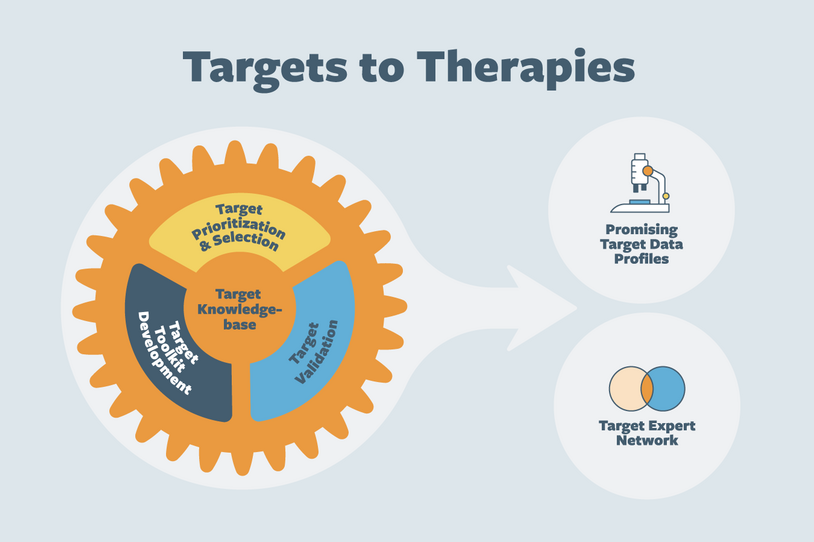
T2T was created to address one of the biggest bottlenecks in Parkinson’s drug development: the gap between promising biological discoveries and therapies ready for investment and clinical testing. The initiative works to systematically prioritize, validate, and de-risk potential drug targets before they enter large-scale development.
While a snowstorm in New York City shifted the meeting to a virtual format, the energy and engagement of the T2T community were undeterred. Across plenary sessions and interactive breakout discussions, participants shared validation updates on priority targets, debated target program strategy and prioritization and helped shape the next phase of work for the initiative.
At its core, the meeting marked an inflection point: initiating work on the next wave of targets while strengthening the tools and data infrastructure that support their advancement.
Advancing Validation Across Diverse Biological Pathways
Day one featured in-depth scientific updates from current T2T validation teams spanning neuroinflammation, endolysosomal biology and protein aggregation.
Teams shared progress on targets including NOD2, TMEM175, TRPML1, ATP13A2 and OGA, highlighting advances in genetic evidence, mechanistic studies, and early therapeutic exploration. Discussions reflected both enthusiasm and scientific rigor. Probing questions around target mechanism, cell-type specificity, directionality and translational strategy underscored the collaborative nature of the initiative.
In several sessions, participants emphasized the importance of defining clear validation criteria, including what experimental results would constitute a decisive “go” or “no-go” signal for a target. This disciplined approach allows T2T to advance promising targets while strategically deprioritizing those that lack sufficient support.
A consistent theme emerged throughout the meeting: T2T is intentionally focusing on promising but understudied targets, generating the evidence needed to reduce uncertainty and enable broader biotech and pharmaceutical investment.
Interactive breakout sessions allowed teams to dig deeper into validation gaps, align priorities and identify next experiments, while also fostering cross-team collaboration and strengthening connections across the network. The meeting was not simply a progress update, but a working session to refine strategy in real time.
Expanding Target Prioritization, the T2T Knowledge Base and Research Tools
In 2025, T2T expanded beyond disease-modifying biology to broaden its target prioritization efforts, incorporating symptomatic targets - into its framework. During the meeting, the team shared updates on its structured prioritization process, including the use of scorecards and cross-disciplinary review to identify key evidence gaps, limitations in current treatment options, enabling tools to support therapeutic development and areas for investment. Importantly, the effort integrated patient-relevant impact, grounding scientific prioritization in lived experience. These findings are now incorporated into the evolving T2T Target Explorer platform.
Day 2 focused on strengthening the infrastructure that supports validation across the field. The T2T Target Explorer platform continues to evolve as dynamic resource, capturing the target prioritization framework and target profiles. It organizes curated target data, highlights validation gaps and maps connections between biology and therapeutic opportunity.
MJFF also previewed early work with an AI-enabled workflow to support ongoing target profiling, enabling new datasets to be integrated while maintaining scientific traceability.
Complementing these efforts, MJFF’s Research Tools program is advancing pathway-enabling resources for prioritized targets, including validated commercial antibodies, newly developed antibodies and immunoassays, and iPSC, cellular and mouse models. These tools will be broadly accessible to nonprofit and industry researchers, reducing experimental risk, strengthening reproducibility and accelerating therapeutic discovery.
Many of the datasets, tools and collaborative networks supporting this work are enabled in part through MJFF’s partnership with the Aligning Science Across Parkinson’s (ASAP) initiative, which is accelerating foundational discovery science across the field.
Together, these efforts reflect a core principle of T2T: rigorous science, transparent data and shared tools create a stronger foundation for therapeutic investment.
Continuing the Conversation: Town Halls and Target Nominations
The annual meeting also laid the groundwork for upcoming activities tied to the next round of target prioritization.
Upcoming town halls will provide additional opportunities for the community to engage in focused discussions around validation strategy and collaboration. An endolysosomal town hall will take place in March, followed by sessions focused on mitochondrial targets (May 6) and aggregation targets (April 28). Registration for the town hall and related sessions is now open.
Researchers are strongly encouraged to contribute to future prioritization cycles through the Target Nomination and Interest Forms. Community input remains central to T2T’s success, and nominations help ensure the initiative reflects the full breadth of expertise and emerging biology across the Parkinson’s research ecosystem.
Building the Evidence to Accelerate Investment
T2T was designed to address a critical bottleneck in Parkinson’s drug development: the gap between promising biology and investable therapeutic hypotheses.
By convening experts across academia, biotech and industry; rigorously interrogating genetic and mechanistic evidence; developing enabling tools; and transparently identifying validation gaps, the initiative aims to build the confidence needed for new targets to advance into the therapeutic pipeline.
The first T2T Annual Meeting demonstrated the strength of this collaborative model. With work now underway on the next wave of targets, and an expanding ecosystem of tools to support them, the field is better positioned than ever to translate emerging biology into meaningful therapies for people living with Parkinson’s.