

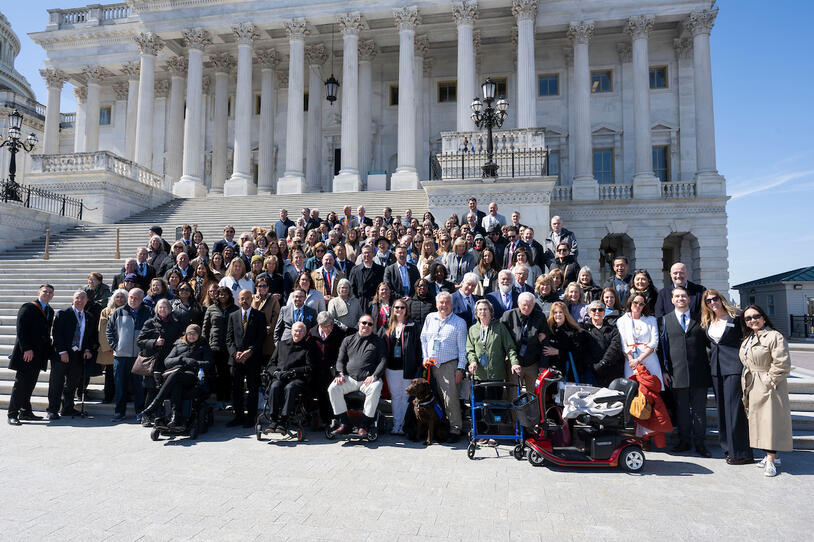
This March, the 2026 Parkinson’s Policy Forum brought more than 300 advocates from 49 states to Washington, D.C. to deliver a unified message to Congress: people living with Parkinson’s and their families can’t wait a minute longer. The time to act is now.
Forum participants held 241 meetings with U.S. senators, representatives and staff — nearly half of Congress — to urge them to increase federal investment in Parkinson’s research; take meaningful action on toxic exposures that can increase Parkinson’s risk including paraquat; and fully implement the delayed National Parkinson’s Project (NPP).
“This is my second year traveling to Washington alongside hundreds of advocates to share our stories and urge Congress to invest in research, protect brain health and change the trajectory of this disease,” said Sara Herrity of Granger, Indiana, who was diagnosed with Parkinson’s at 39 years old. “Parkinson’s is affecting more families every year, and we cannot afford to wait.”
The Forum’s calls to action align with The Michael J. Fox Foundation’s 2026 public policy agenda and are backed by broad bipartisan voter support. A recent poll found that:
More than 3 in 4 voters support doubling federal investment in Parkinson’s research
About 2 in 3 voters support curbing or banning paraquat
Roughly 4 in 5 voters support a coordinated national strategy to improve prevention, treatment and care like the NPP
At the same time, the financial costs of Parkinson’s disease continue to grow — making these policy changes even more critical. A new report released shortly after the Forum found that Parkinson’s disease cost the United States $82.2 billion in 2024, reaching previous projections nearly a decade earlier than expected.
“Washington responds to organized, persistent advocacy, and the Parkinson’s community has proven that,” said Dan Feehan, chief policy and government affairs officer at The Michael J. Fox Foundation. “The growing scale of this challenge and the strength of public support make clear that Congress must act.”
Photo Gallery
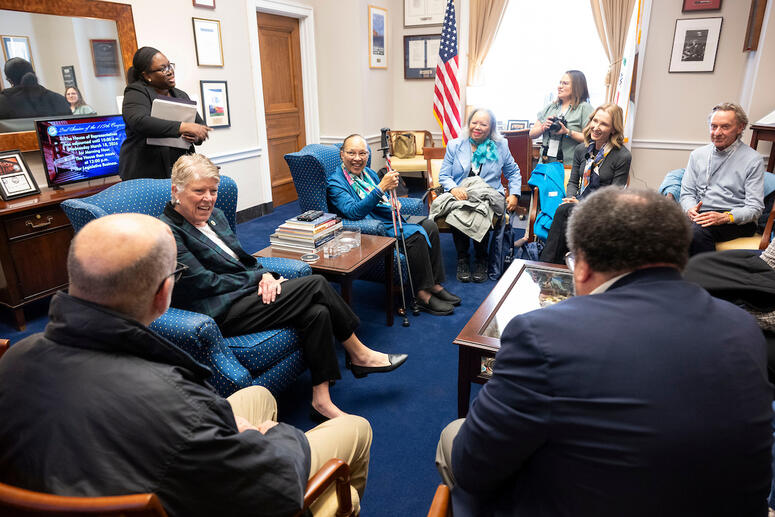
California advocates meet with Representative Julia Brownley (D-CA-26).
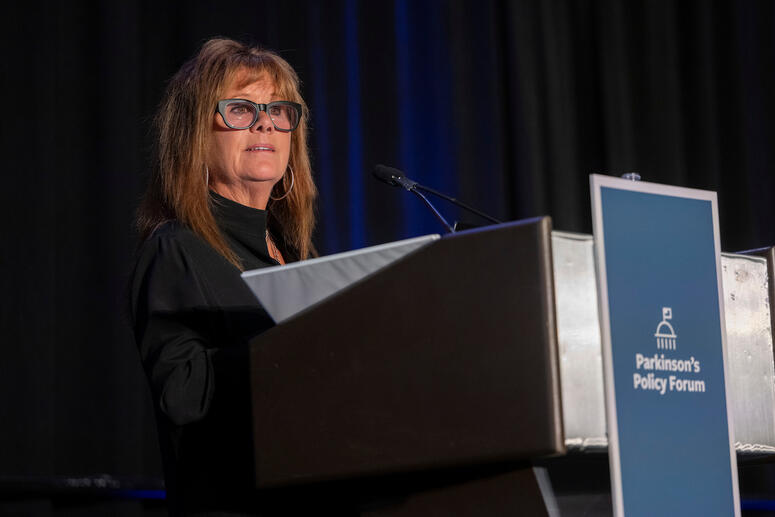
Emmy and Tony-winning producer and Parkinson’s patient advocate, Jenifer Westphal, rallies the crowd with a special keynote address before Hill meetings.
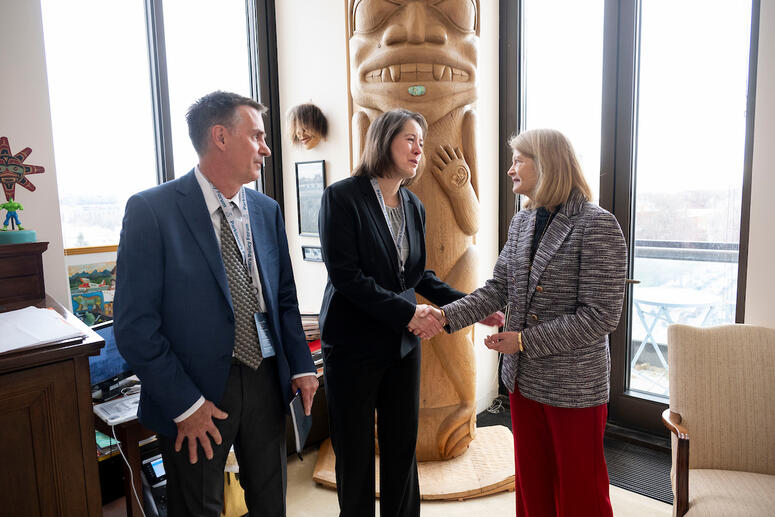
Alaska advocates meet with Senator Lisa Murkowski (R).
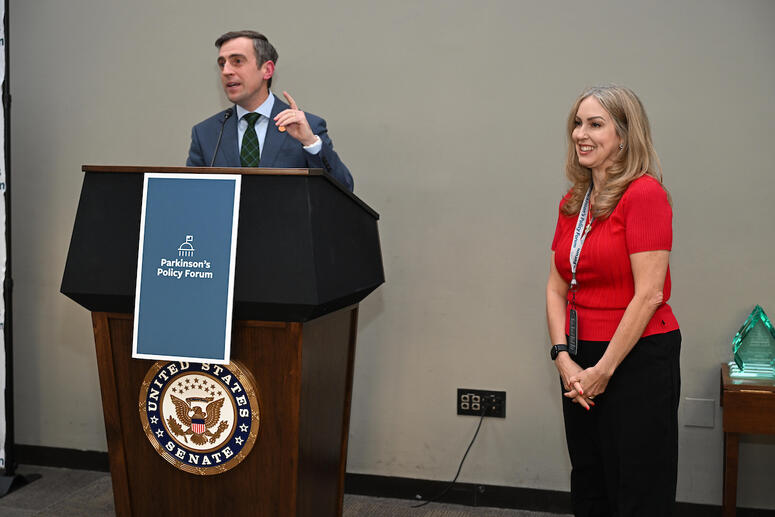
MJFF Chief Policy and Government Affairs Officer, Dan Feehan, presents Esther Labib-Kiyarash with a Udall Public Service Award for her years of advocacy, especially her work on Texas Proposition 14 which led to a historic $3 billion state research investment.
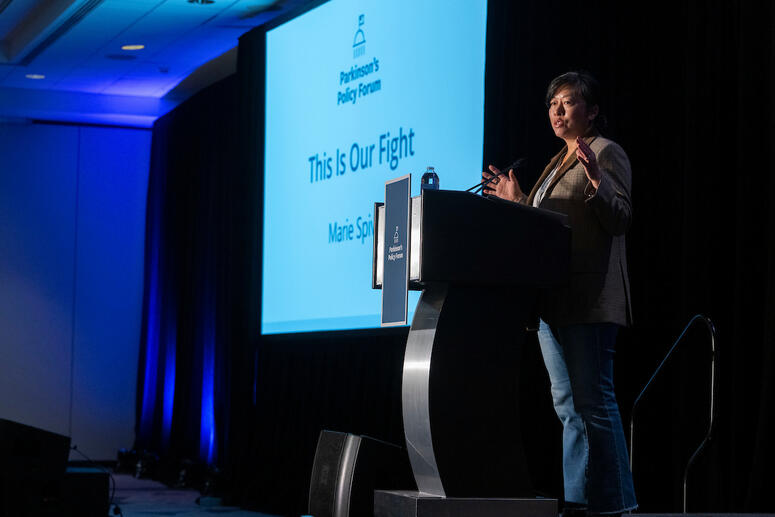
Keynote speaker, Marie Spivey, shares her personal experience as a Parkinson’s care partner for her husband, Freddie Roach, a professional boxing trainer.
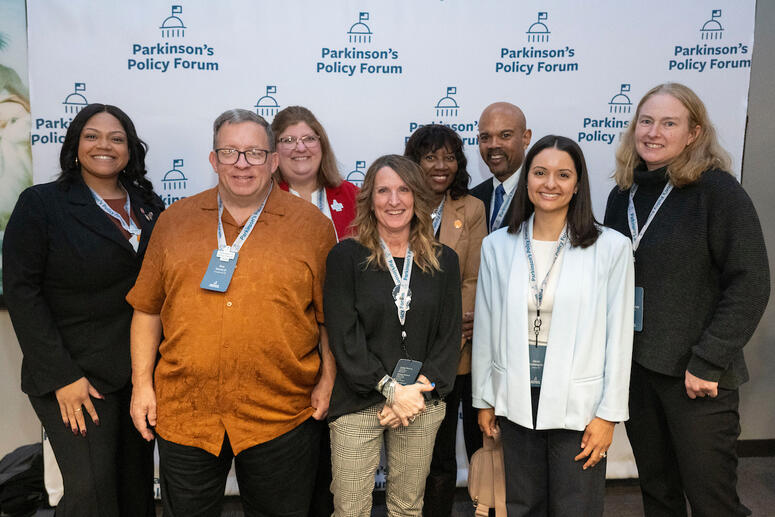
Ohio advocates enjoy a reception on the Hill after a full day of meetings with U.S. House members.
A Community United in Purpose
The strength of the Parkinson’s community was evident throughout the Forum — not only in meetings on Capitol Hill, but in the connections built among advocates from across the country. For many, this event is as much about coming together to share experiences and learn from one another as it is about engaging policymakers. It’s a moment to recognize how far this community has come, and to prepare for the work still ahead.
That spirit of collaboration was driven by the leading national Parkinson’s organizations hosting this year’s Forum: The Michael J. Fox Foundation, the American Parkinson Disease Association, the Parkinson’s Foundation and PMD Alliance. Many member organizations from the Unified Parkinson’s Advocacy Council also participated.
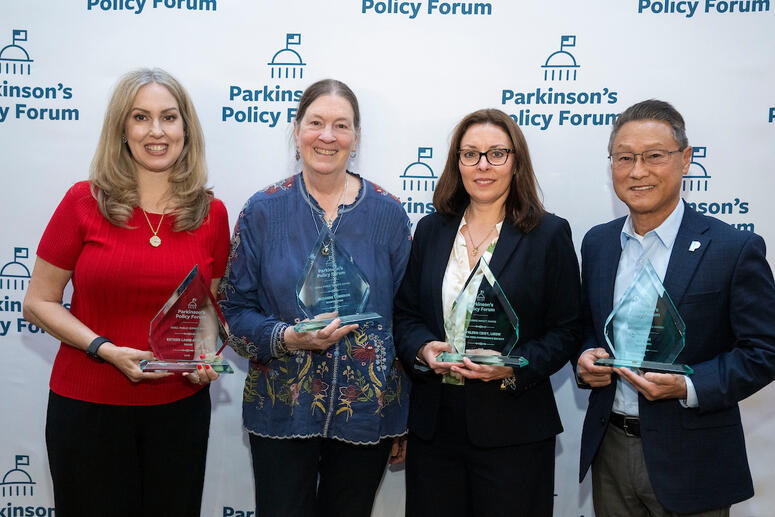
The host organizations also came together to honor five advocates with the 2026 Udall Public Service Awards: Esther Labib-Kiyarash, Gil Kim, Suzanne Cameron, Jane Williams and Kathleen Crist.
Named for former U.S. Representative Morris K. Udall, who lived with Parkinson’s disease during the final years of his career, the award recognizes individuals who have demonstrated exceptional commitment to public service and advocacy.
Advocacy 365 Days a Year
During the Forum, supporters at home amplified our messages by sending more than 2,000 emails to Congress, while attendees shared their experiences across social media, extending the Forum’s reach nationwide.
That level of engagement shows how active the Parkinson’s community is all year long. Advocates make calls, send emails, meet with lawmakers, testify for state legislation and build lasting relationships with decisionmakers. This commitment and momentum are what drives real impact and gets us closer to a future without Parkinson’s disease.
Our next advocacy opportunity is coming soon: the virtual Parkinson’s National Day of Action on April 7, 2026. Join our Parkinson’s Policy Network to make your voice heard on April 7, and for opportunities to stay engaged in Parkinson’s advocacy throughout 365 days a year!
Photo Gallery

Forum attendees share their reflections.