

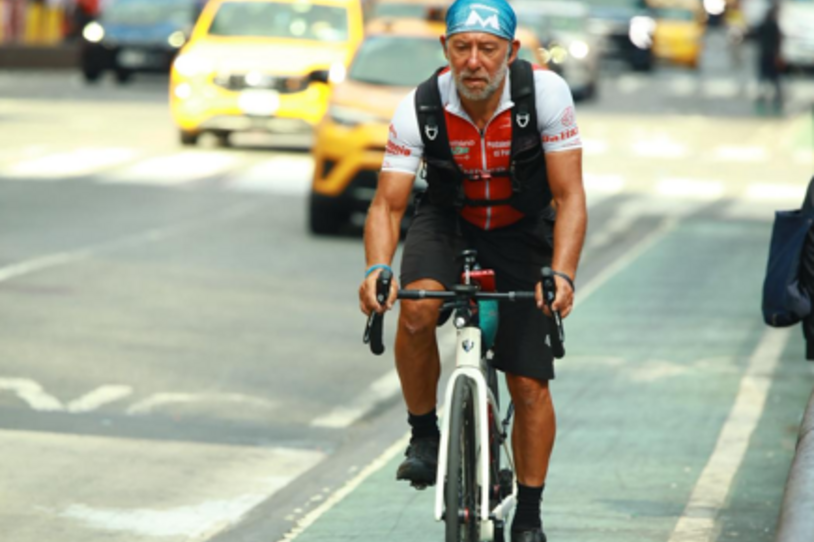
Alejandro Carcano biking on the streets of New York City.
I have never been able to imagine my life without a bicycle. For as long as I can remember, I’ve been exploring the world on two wheels. Cycling has always been more than transportation—it’s my happy place, my profession, my philosophy. Running a bike shop, I taught people not just how to pedal, but how to embrace cycling as a way of life: grounded, connected, and intentional. At twenty kilometers an hour, the landscape becomes your friend—every road offers a new perspective.
I thought I’d spend my whole life moving through the world this way. I never imagined my own body would one day try to put a brake on that freedom.
I was in my late 40s when I noticed something was off. At first, the changes were subtle: my handwriting shrank and became harder to read. Using a computer mouse felt clumsy. My fine motor movements weren’t as precise. A colleague couldn’t make out the address I’d written. Comparing an old invoice to a recent one, I saw my handwriting had changed completely.
After several medical tests, I heard four words I didn’t want to be true: “You have Parkinson’s disease.” I was crushed and fell into a deep depression—the kind that makes you want to permanently hide under the covers. But I had children to feed, responsibilities to meet, and the personal obligation to keep going. Giving up wasn’t an option.
When I was first diagnosed, my “medical team” was just one neurologist. He wasn’t a movement disorder specialist, but he had the courage to look me in the eye and give it to me straight. While that moment was painful, it was also a starting point to move forward. I scheduled an appointment with a movement disorder specialist to confirm the diagnosis, which was emotionally complex despite being a simple administrative task. Receiving the confirmation alone, gave me the chance to internalize and process it before deciding when and how to share the news with family and friends.
I learned how deeply personal and individualized the response to a Parkinson’s diagnosis is. Some people want immediate support, but I needed time to process before letting others in. This is when the real work began. Now that I knew the name of my new life companion, I had to focus on daily management—the stiffness, the grip strength, the energy to keep going. I don’t have a multidisciplinary team with physical therapists, occupational therapists, or psychologists, partly because it’s not easy to access that kind of care in Argentina, and partly because my natural tendency as a high-performance athlete was to do what I knew best: simply get moving.
Exercise continues to be my faithful companion and a powerful medicine on my Parkinson’s journey. Every morning, before anything else, I do a 30-minute functional workout to focus on flexibility and strength. I ride, I run, I do push-ups—whatever it takes to stay active and connected to my body. Sleep, however, is one of my biggest challenges. Insomnia can steal my energy and mood, which is why I value small habits: staying active, eating well, taking my medications, and keeping a positive mindset.
Inevitably, Parkinson’s changed my life. I wasn’t teaching as many students, took on fewer projects, and started thinking about the future differently. I also realized I wanted others living with Parkinson’s to know they’re not alone, which led to the creation of INDEPAR (Research, Sport, Parkinson). Then came the idea for my biggest adventure to date, born out of frustration.
We had organized a walk to raise awareness about Parkinson’s, but very few people showed up. The lack of participation was upsetting. I felt I needed to do something big that would make people stop and take notice. That’s when I decided I would ride my bicycle from Buenos Aires, Argentina, all the way to New York City with the generous support of some of Argentina’s greatest athletes.
New York wasn’t a random destination—it’s home to The Michael J. Fox Foundation, an organization that has greatly inspired me. On June 1, 2025, I left home to begin pedaling north. Ninety days later, I rolled into the Big Apple. Throughout my travels, quitting never crossed my mind. I was in a meditative state, always looking and pedaling forward.
Of course, there were tough days, but every sunrise was a new opportunity to keep going, whether it was crossing countries by bike or living with Parkinson’s.
It’s important to know and believe that you can live fully with Parkinson’s. You can have a partner, enjoy music, sing, dance, and continue enjoying your hobbies. Parkinson’s can even give you more willpower and new goals. The key is to adapt and to challenge life with more determination than ever. As for me, I keep on pedaling. I don’t know how much longer I’ll be able to, but every kilometer I ride is a reminder that time is finite. That’s why I live every day to the fullest.
Parkinson’s didn’t stop me. On the contrary, it taught me to move with more purpose than ever. In fact, my next goal is to take part in an elite mountain bike race in Morocco, where I was invited as a special participant. After finishing the race, I intend to cycle to Jerusalem to continue generating interest in my story and raising Parkinson’s awareness.
Check out The Michael J. Fox Foundation’s resources for people newly diagnosed here. Additionally, check out the Foundation’s easy-to-read, downloadable guides, where movement disorders neurologist Rachel Dolhun, MD, and other experts provide practical tips and real-world advice for navigating life with Parkinson’s disease.
Photo Gallery
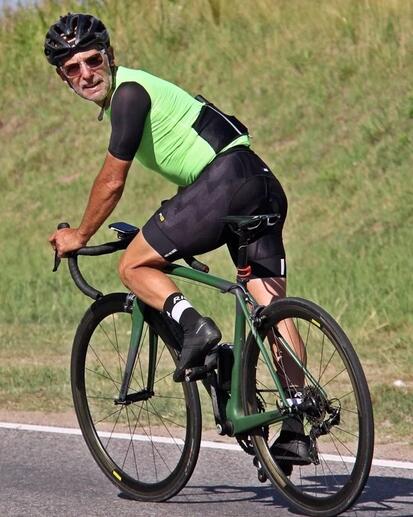
Alejandro Carcano on his 12,000-kilometer journey from Buenos Aires to New York City.
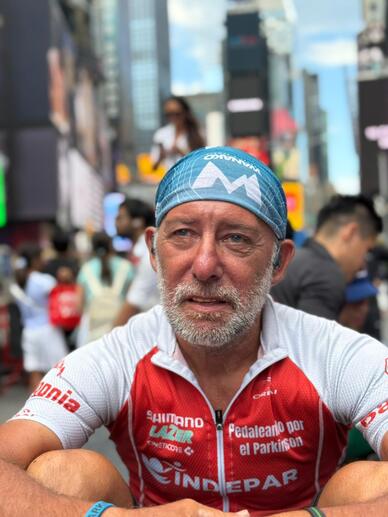
Alejandro Carcano in Times Square, New York City after completing his 12,000-kilometer journey.
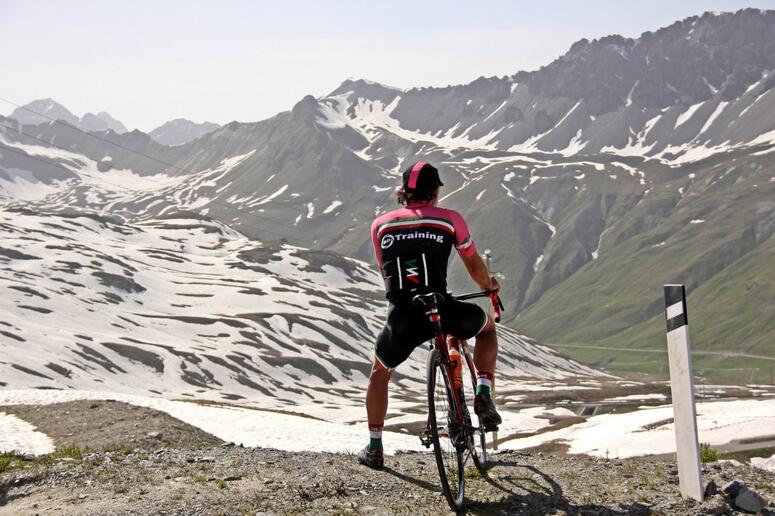
Alejandro Carcano enjoying the views on his 12,000-kilometer bike journey.