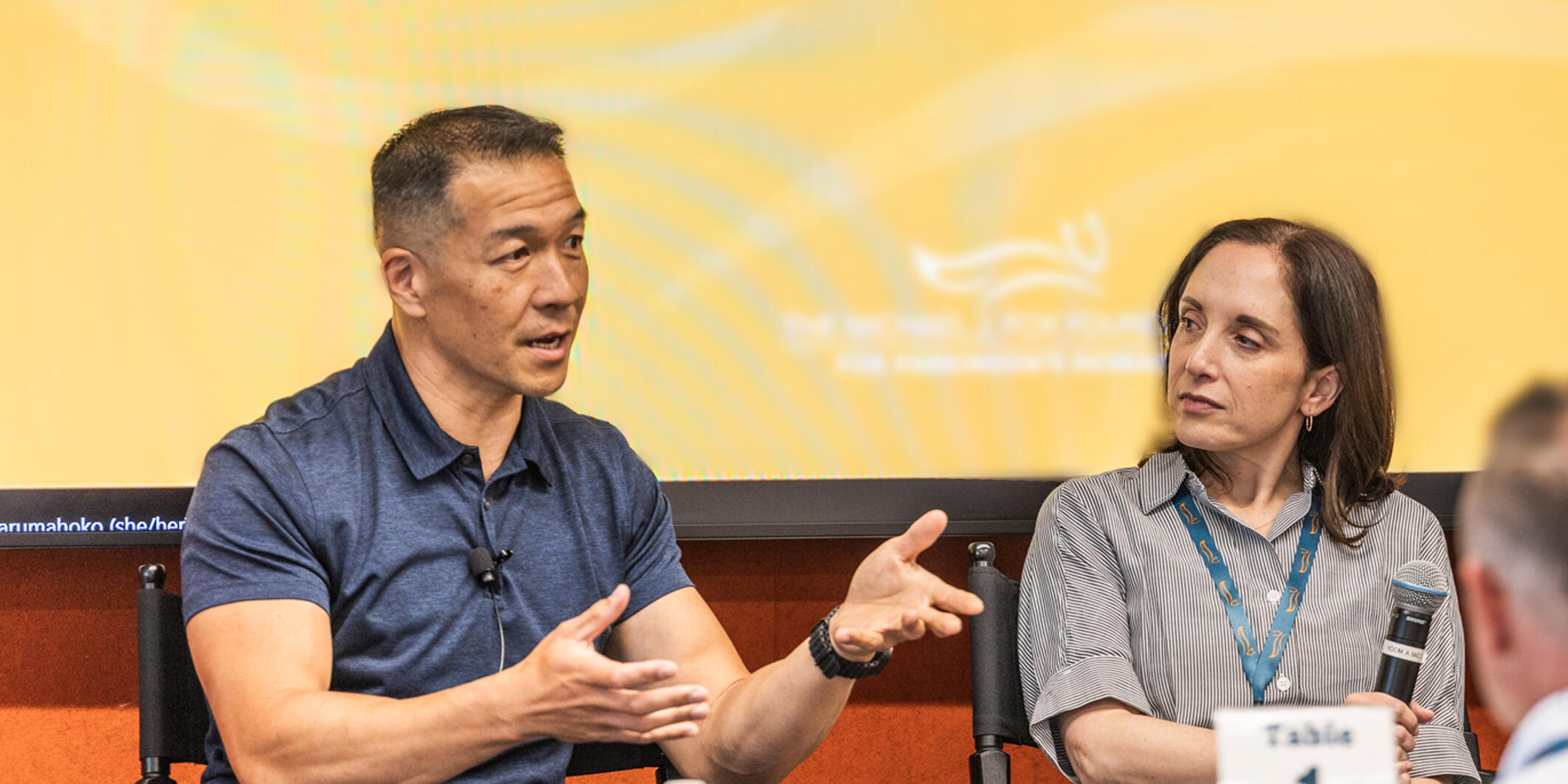
Community StoriesPatient Council member Jimmy Choi speaks at MJFF’s Social Influencer Summit.
Jimmy Choi
Why Everybody Has a Story Worth Telling
Written by Allison Boiles
Jimmy Choi has become one of the most recognizable voices in the Parkinson’s community. He’s tackled the “American Ninja Warrior” course six times on national television, and today, you can find him in the writers’ room of “Shrinking”, the fan-favorite series on Apple TV.
His story is remarkable. Diagnosed with Parkinson’s at 27 in 2003, Jimmy transformed his despair into world records, ultramarathons and advocacy. Along the way, he built a massive online following around a simple message: Never stop showing up — for yourself and for your community.
Everyone has something that brings them joy... Whatever it is, that’s your story. You don’t have to run 'American Ninja Warrior.' You don’t have to speak on stages. You just have to keep doing the thing that brings you joy.
A positive message like Jimmy’s can have a ripple effect of impact.
We sat down with Jimmy to get his take on what it means to share his truth, how he separates credible information online from noise and why he believes everyone has a story worth telling.
MJFF: You’ve shared your Parkinson’s story countless times. What’s a part of Parkinson’s you think doesn’t get enough attention?
People may see tremors or dyskinesia, even though not everyone experiences those. But they don’t see what’s happening inside the brain. Depression, anxiety, apathy — those can be even more debilitating than the physical symptoms.
Depression doesn’t just make you sad. It isolates you. You know you should get up. You know you should exercise. You know you should spend time with your family. But the urge not to is incredibly powerful. It’s not a choice, and that’s something that’s still really hard for people to understand.
MJFF: How have you grown more comfortable talking openly about your Parkinson’s, especially those tricky topics?
Jimmy: The more people I meet living with Parkinson’s, the more I recognize myself in their stories. They’ll describe fatigue or struggling to get moving, and I realize what they’re really talking about isn’t always physical — it’s mental. I’ve lived it, so I know what it feels like.
I’ve also realized that encouraging people to exercise is important, but helping people recognize the mental barriers they’re facing may be just as important. If I can help someone understand what took me years to figure out, maybe they won’t have to spend as long feeling stuck.
Jimmy and his wife, Cherryl, live in the Chicagoland area with their two children, Karina and Mason.
MJFF: Parkinson’s information is everywhere online. According to a 2026 report by the Pew Research Center, half of adults under 50 in the United States get health and wellness information from online influencers. How do you decide what’s trustworthy and should be shared with your audience?
Jimmy: I always start with the science. And I ask: Who collected the data? How large was the study? Has the research been replicated? Are multiple researchers finding the same thing?
Then I look at who’s publishing it and whether there’s any conflict of interest. And I pay attention to language. If someone immediately starts talking about a “cure” or claims they’ve “reversed” Parkinson’s, my skepticism goes way up. That doesn’t mean I dismiss it — but it definitely means I look closer.
MJFF: Has the way you consume information changed since you were diagnosed?
Jimmy: When I was diagnosed, Google didn’t even exist yet. We were still using AOL. (laughs) Now, information is everywhere — YouTube, social media, podcasts. Anyone can publish anything. That makes learning how to evaluate information even more important.
I also think about who I’m trying to reach. Different generations consume information differently. If we want to build awareness about Parkinson’s, we need to meet people where they are.
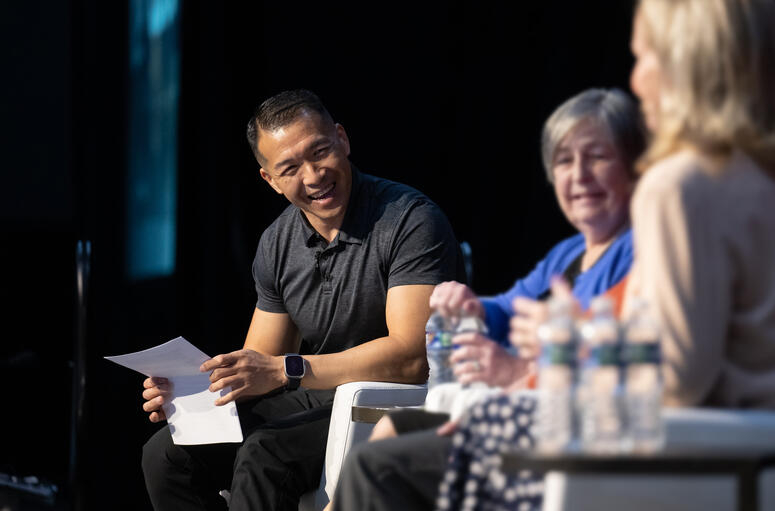
Jimmy speaks with panel guests at a Parkinson’s IQ + You event.
MJFF: You’ve always made getting involved feel accessible. What would you say to someone living with Parkinson’s who thinks, “I’m not Jimmy Choi — I don’t know where to start?”
Jimmy: I hear that all the time. People tell me, “I’m not you.” My response is always the same: I’m not you either.
Everyone has something they’re good at. Everyone has something that brings them joy.
Maybe you knit sweaters for dogs. Maybe you paint. Maybe you play music. Whatever it is, that’s your story.
You don’t have to run “American Ninja Warrior.” You don’t have to speak on stages. You just have to keep doing the thing that brings you joy.
Because joy matters. Joy is dopamine. It helps your mental health, and it reminds you that Parkinson’s isn’t the only thing that defines you.
MJFF: After all these years of sharing your story, what still inspires you?
Jimmy: Honestly? It’s hearing everyone else’s story. When someone comes up and tells me that I’ve inspired them, I want to hear their story. I want to know what they’ve been through and what keeps them going.
Their stories bring me joy. They remind me that I’m not fighting alone. I might be one of the louder voices, but I’m just one voice among thousands. And that’s what I hope more people realize.
Everybody has a story worth telling.
Share Your Story
Your experience with Parkinson’s has the power to inspire, educate and create change. Tell MJFF your story today, and help amplify the voices in our community.
We use cookies to ensure that you get the best experience. By continuing to use this website, you indicate that you have read our
Terms of Service and Privacy Policy.