

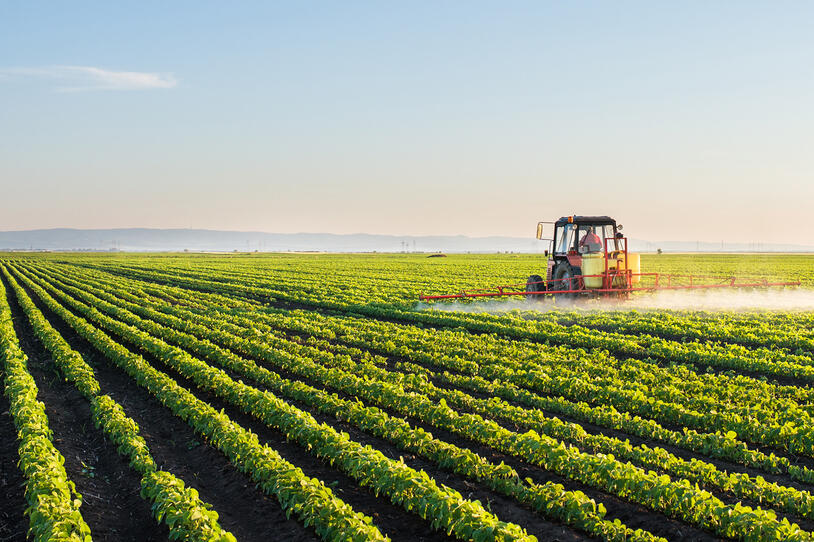
Momentum is building in the effort to ban paraquat — a highly toxic pesticide linked in scientific studies to increased risk of Parkinson’s disease (PD) — from use in the United States.
In recent weeks, the field has celebrated two major milestones: the introduction of federal legislation that would ban paraquat nationwide, and Vermont becoming the first state in the country to prohibit its use. Together, these developments mark a significant shift in a years-long campaign to address environmental factors that may contribute to Parkinson’s.
For more than a decade, The Michael J. Fox Foundation (MJFF) has worked alongside researchers, people with PD and policymakers to advance understanding of environmental risk factors and push for stronger protections against harmful exposures.
We spoke with Dan Feehan, MJFF’s chief policy and government affairs officer, to put these victories in context, and to share what comes next.
MJFF: On June 18, two members of Congress introduced a federal bill that would ban paraquat in the United States. How significant is this moment, and what happens next?
Dan Feehan (DF): The introduction of a federal ban bill is a significant milestone. It reflects a growing recognition among lawmakers that paraquat poses a public health concern that deserves national attention.
At the same time, it’s important to be realistic about the legislative process. This is not the first time a federal ban has been introduced. And passing a federal ban requires support in both chambers of Congress and the president’s signature. That can take time, particularly when agricultural and chemical industry interests are involved.
What matters most right now is that the conversation has shifted. Federal lawmakers are no longer asking whether paraquat should be scrutinized; they are actively proposing solutions.
MJFF: The Foundation has also pushed for the U.S. Environmental Protection Agency (EPA) to ban paraquat. How does this new federal bill differ from that effort?
DF: For years, we’ve advocated for the EPA to take action on paraquat because that’s the most common pathway for addressing harmful chemicals in the U.S. This regulatory process is designed to evaluate scientific evidence and determine whether a pesticide can be safely used — and we’ve long believed the evidence on paraquat warrants stronger action, including a ban.
With a federal bill, Congress can act more directly — a law would immediately prohibit paraquat use nationwide, rather than relying on the EPA’s review process, which can take years (Editor’s Note: Paraquat has been under review at the EPA since late 2022). If this bill is ultimately passed and signed into law, it would make further regulatory action unnecessary by establishing a clear, nationwide ban. MJFF will continue to advocate for both efforts until paraquat is banned in the U.S.
MJFF: Vermont became the first U.S. state to ban paraquat. How do the federal and state efforts support one another? Are both needed?
DF: Federal action would provide the strongest and most comprehensive protection because paraquat is used across the country. A national ban would create a consistent standard for all Americans.
State action, however, often helps influence federal progress. Vermont’s landmark law demonstrates that policymakers can act on the scientific evidence linking paraquat exposure to PD. It creates a model for other states and sends a powerful message to federal regulators and lawmakers that protecting public health is both possible and politically achievable. It also showed us that we should settle for nothing less than a ban.
The two approaches reinforce one another: States build momentum from the ground up, while federal action can ultimately deliver nationwide protection.
MJFF: What’s the most important thing you want people to remember about this work?
DF: Parkinson’s is not solely a matter of bad luck or genetics. Research increasingly shows that environmental exposures play a role in disease risk, and paraquat is one of the clearest examples of a preventable risk factor.
No single policy will end Parkinson’s. But reducing exposure to known environmental hazards is one of the few opportunities we have right now to prevent some future cases before they begin.
This work is about protecting public health — farmers, agricultural workers, rural communities and future generations. It’s about acting on decades of scientific evidence and recognizing that preventing Parkinson’s is just as important as treating it.
MJFF: What can I do if I want to get involved?
DF: Your advocacy on this issue works — and recent victories prove it. The progress we’re seeing today happened because advocates spoke up. Continued engagement will be essential to turning this momentum into lasting change. And we need more volunteers to tell their stories.
Sign up for the Parkinson’s Policy Network so you’ll know when your voice can make a difference.