

The Michael J. Fox Foundation has an ambitious Strategic Research Agenda to guide the field over the coming years. The plan aligns with our goals to identify and move forward the research closest or most critical to patient relevance, avoid duplication of efforts and leverage donor dollars to go as far as possible. In short, find the research with the best odds and then go all in.
The Foundation’s Strategic Research Agenda has four interrelated pillars: Clearer Disease Diagnosis, Better Treatment Pipelines, Faster Clinical Trials and Catalyzed Communities.
Clearer Disease Diagnosis

The first pillar focuses on using continued biological discoveries to achieve Clearer Disease Diagnosis. What does that mean? Compare Parkinson’s disease (PD) to cancer. Twenty years ago, a person was said to have lung cancer, say, or colon cancer — basing the diagnosis on where the cancer was first detected, rather than its genetic fingerprint. Today, when doctors extract a tumor sample, they can genetically characterize it to get a more precise idea of the type of cancer the patient has — and what specific therapies can be used to target the biological characteristics of that cancer. Data derived from the Foundation-led Parkinson’s Precision Medicine Initiative (PPMI) study seem to indicate that, like cancer, there are different variations of Parkinson’s disease based on biology.
Understanding these variations can lead to more effective treatments. To get there, the Foundation is working to understand the biological drivers of Parkinson’s, including the role of the environment and genetics. We are also supporting work to identify new biomarkers and building frameworks that will help to identify subtypes of Parkinson’s and distinct disease stages, which will lead to more personalized and effective treatments.
Better Treatment Pipelines
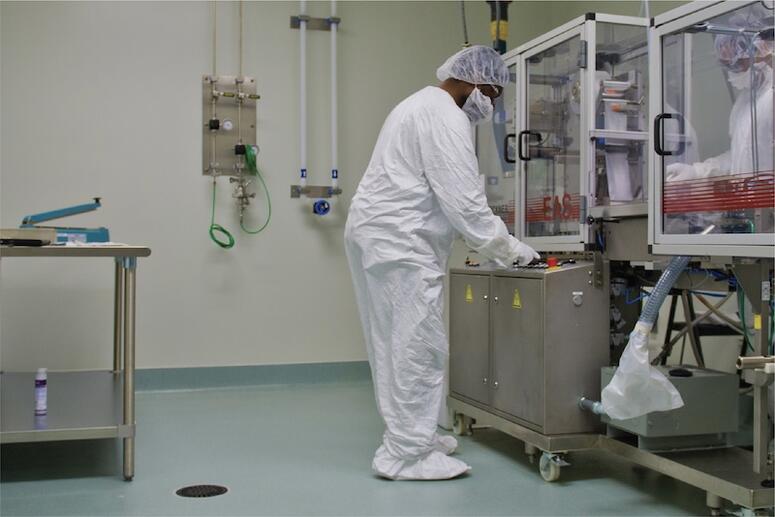
The Foundation’s second pillar is to develop Better Treatment Pipelines by supporting the advancement of new therapies from the most promising sources, whether it’s an academic lab or a drug manufacturer. Until now, Parkinson’s treatments have been like levodopa, the drug which offers temporary relief from PD symptoms, and deep brain stimulation, which is a surgical procedure that is only available to a subset of people with the disease. That’s not nothing, of course; as the disease progresses, Parkinson’s symptoms become debilitating. The Foundation supports efforts to improve on the drugs currently on the market, with the goal of easing symptoms and restoring patients’ ability to function. But symptom control is where we are now; a treatment that can slow or halt the disease is the end goal. And we are getting there: Today, the Parkinson’s clinical pipeline is filled with a diverse array of more than 180 therapies — over half of these are disease-modifying, meaning they hold the potential to slow or stop disease progression.
The Foundation’s work is focused on the earliest stages of drug development, when promising therapies often go unstudied because of lack of funding. Our Targets to Therapies Initiative helps bridge the gap between biological discoveries and drug development by identifying and validating targets ripe for additional research. The Therapeutics Pipeline Program then advances those discoveries through preclinical and clinical development, helping overcome key scientific and funding barriers.
MJFF also invests in high-priority treatment areas, including the LRRK2 Investigative Therapeutics Exchange, a collaboration designed to fast-track therapies that target LRRK2-associated Parkinson’s through data, tools and discoveries that are shared in real time across the globe.
Through these and other initiatives, the Foundation is funding research that improves upon our understanding of how the disease develops. Because when researchers can confidently say, “We know what causes Parkinson’s,” the targets will become clearer, the drug development much more refined and the de-risking much more strategic. And the risky de-risking work that the Foundation takes on, paired with the strategic direct funding of promising new therapies, encourages pharmaceutical companies to invest in next-generation treatments that will far surpass what has been available before.
Faster Clinical Trials

Faster Clinical Trials is the third pillar of the Foundation’s Strategic Research Agenda. Today’s treatment pipeline is the most robust we’ve ever seen, thanks to the work of the Foundation and our partners in academic and industry labs, and importantly, the discovery of a Parkinson’s biomarker in April 2023.
This significant breakthrough burst open doors to scientific possibility. PPMI study leaders announced that they had confirmed a Parkinson’s biomarker, the so-called alpha-synuclein seeding amplification assay (aSyn-SAA). For the first time, the calling card of Parkinson’s — misfolded alpha-synuclein proteins that clump and lead to the cellular damage that is the hallmark of Parkinson’s — could be detected with 93 percent accuracy in a living person. This advance positioned the Foundation to revolutionize the clinical trial process by making it more efficient and faster. The combination of the biomarker and extensive data collected in PPMI will allow trial leaders to ensure that the best subjects are chosen for the trials — and that they can be quickly enrolled. In fact, the U.S. Food and Drug Administration in September 2024 publicly supported the use of aSyn-SAA as a tool for patient selection and a way to build better clinical trials. This nod to the effectiveness of aSyn-SAA points to the value of PPMI data in research.
But this is just the beginning — the biomarker points to one type of Parkinson’s pathology. Researchers are uncovering additional biomarkers reflecting Parkinson’s changes, and the more that are found, the more we will understand about the many different biological forms of PD.
It is also important that clinical trials be diverse. Thanks to the Foundation’s deep investments in genetics and a new global study it is leading in conjunction with the Aligning Science Across Parkinson’s (ASAP) initiative, researchers are learning more about the genetic nature of Parkinson’s and how medications work in diverse populations. Of note was a recent discovery identifying a unique genetic variable in Parkinson’s patients of West African descent. The Foundation is also supporting novel approaches to increase research participation in traditionally underrepresented communities.
We’re also modernizing how trials are run. By supporting platform trials — a clinical trial in which multiple treatments can be tested at once within one infrastructure — MJFF is helping generate clearer results and bring promising treatments to patients faster. The Foundation is sponsoring the upcoming Path to Prevention trial, which will investigate therapies aimed at stopping the disease at its earliest stages, when neurons are being lost but before symptoms occur.
Catalyzed Communities

Catalyzed Communities connect every pillar of the Foundation’s work — they are the underlying forces that propel the research mission forward.
Parkinson’s research moves faster when everyone works together. People with Parkinson’s and their families contribute invaluable insights, experiences and data. Researchers and clinicians use that knowledge to answer fundamental questions about the disease. Industry leaders and regulators develop, test and approve promising therapies. Care teams translate research advances into better care. And policymakers build systems that support quality, meaningful and accessible healthcare.
Progress depends on bringing these communities together — creating trusted spaces to share knowledge, build consensus and turn collective action into impact.
In our role as the convener, the Foundation unites stakeholders around the most urgent needs in Parkinson’s research and care. We educate and engage the community through the website, webinars and podcasts. We advocate for policies that support research, treatment access and quality of life through the Parkinson’s Policy Network. We engage researchers through the many funding opportunities and workshops, conference attendance and our own Parkinson’s Disease Research Exchange (PDRx). We gather investors and industry at events, such as the annual Parkinson’s Disease Therapeutics Conference. We train physicians as part of programs like the Edmond J. Safra Fellowship in Movement Disorders.
A Research Agenda Yielding Results
Although MJFF is the acknowledged leader in Parkinson’s research, we haven’t done any of this by ourselves. Over the years, we have partnered with thousands of research labs, hundreds of pharmaceutical companies and millions of donors and community fundraisers who have contributed more than $3 billion to the cause — and counting.
The fact is: The field is advancing. Clinical trials are becoming more efficient and better organized. The biomarker has given the entire Parkinson’s community a new sense of possibility. And this was all made possible by the Foundation’s role as the risk takers.
Defining the disease and improving clinical trials required the vision and initiative to invest more than $750 million in PPMI, a gamble which made the discovery of the biomarker possible. Developing better treatments required taking on the risks inherent in early drug development, paving the way for broader investment and innovation.
High risks. High rewards. It’s a strategy that has yielded results. The building blocks, so carefully plotted, have come together to create a solid, unshakeable and relentless vision for a future without Parkinson’s disease.