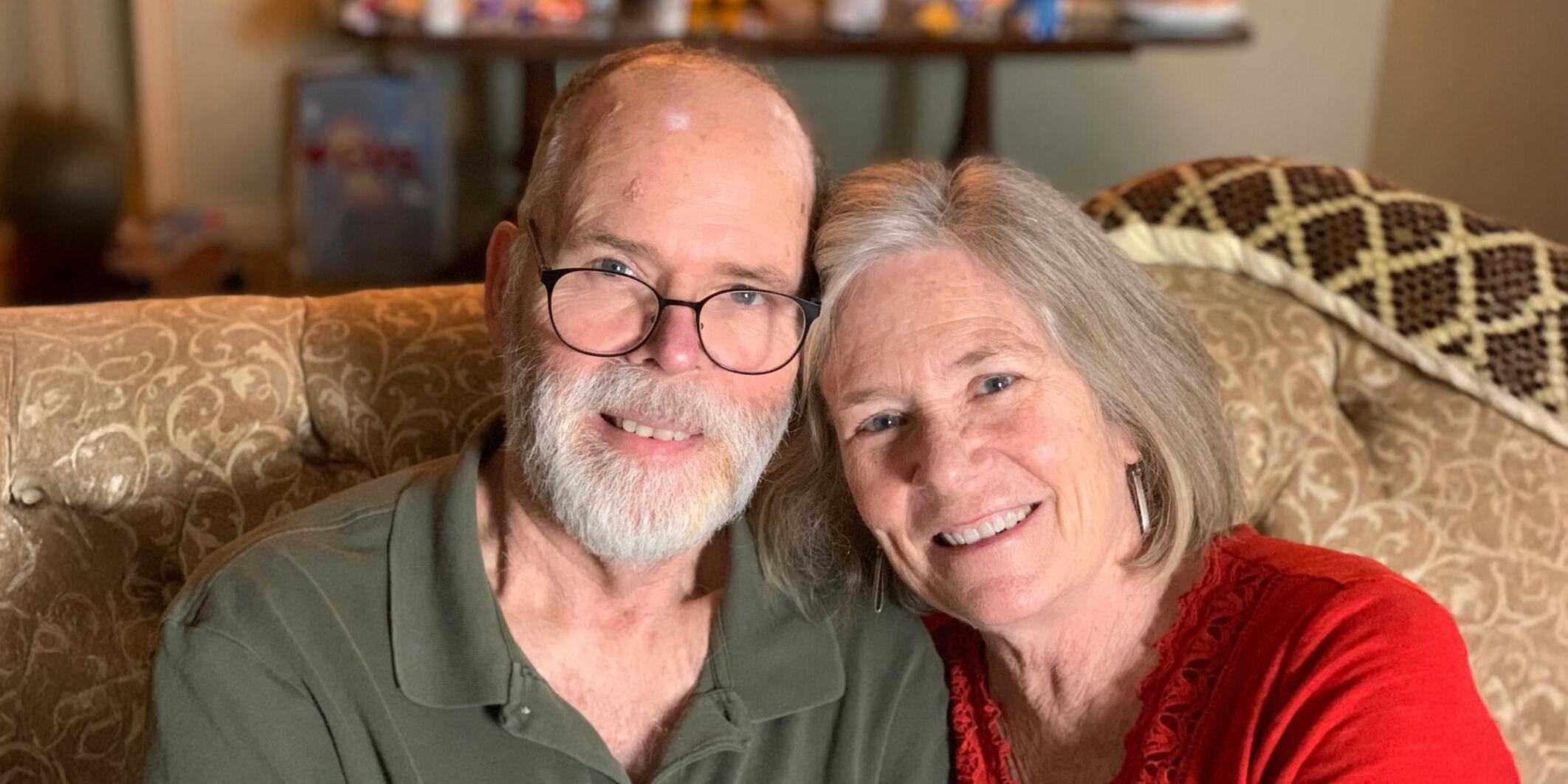
My husband, Sonny, was 42 when his Parkinson’s symptoms first showed up. He was a musician and played string instruments — it’s what he did for a living. He knew something was off when he couldn’t push the strings down with the accuracy and speed he was used to.
He told me and his doctor that something felt wrong with his brain. But he was told he was too young for Parkinson’s. It took another six years to get an official diagnosis.
Parkinson’s disease whittled away at Sonny’s life for another 21 years. Over that time, Sonny lost his ability to do many of his favorite things. He also lost his livelihood. He lost his ability to play music, and when his beautiful voice became a whisper (a trademark of Parkinson’s), he lost his ability to sing, too. He had to give up his small plane pilot’s license, and along with it, his role as a volunteer for our local hospice where he flew pediatric patients over their houses for a fun diversion.
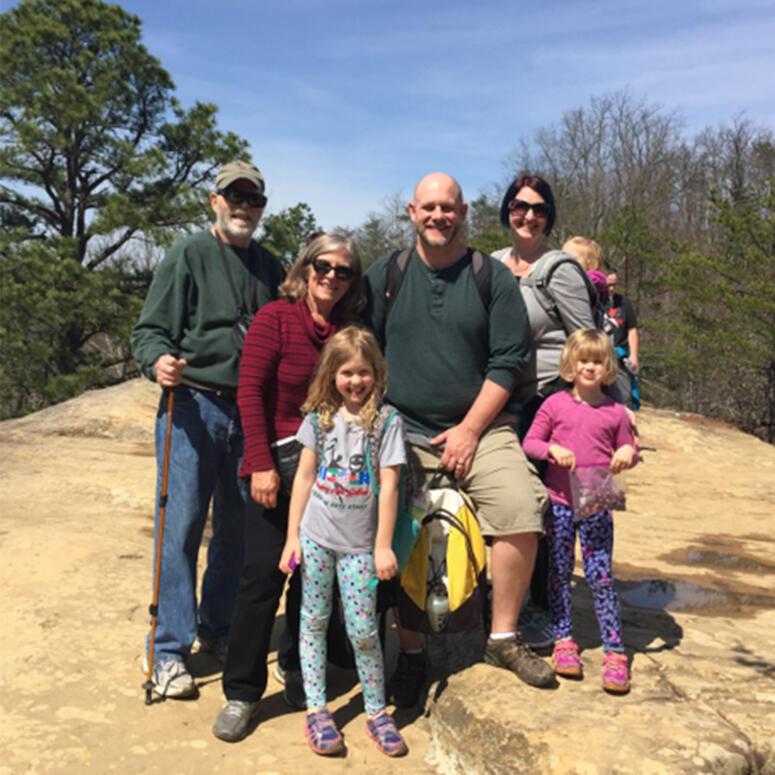
Sonny also lost his ability to go for long-distance hikes. In 2017, we hiked to the top of Natural Bridge in the Red River Gorge together for the last time. Sonny wanted his three granddaughters to see the view that captivated us for over 40 years. It took every ounce of energy he had.
When Advocacy Leads to Change
Our experience with Parkinson’s — Sonny’s as a patient and mine as a family member and care partner — is the reason I joined The Michael J. Fox Foundation’s Parkinson’s Policy Network as an advocate. State and federal government leaders have the power to help make life better for people with Parkinson’s and end this disease for good. I raised my hand because I knew that sharing our story could help other families like mine.